


Back when I was still fighting full time, I used to make the long drive up to Woburn, Massachusetts to train strength and conditioning with Kyle Holland. Early mornings, long drives, hard sessions. It was a grind — but it was the kind of grind that made a real difference.
At some point, Kyle asked if we could add a second person to the sessions. Fine by me. So I show up one morning and find out the second person is Travis Stevens.

If you don’t know Travis, look him up. He’s one of the most decorated judoka in American history — Olympic silver medalist, multiple World Championship appearances, and a BJJ black belt under John Danaher. The guy is flat-out phenomenal.
But the thing that stood out to me more than any of his accomplishments was how disciplined he was. I’ve trained with a lot of elite athletes in my life. Travis is in a different category. When he wasn’t in Woburn training with us, he was in New York. When he wasn’t in New York, he was overseas training with a European national team. He was always doing something. Always putting in the work.
Honestly, when I first started training with him, I couldn’t crack him. The guy barely talked. So naturally, I did what any reasonable training partner would do — I set up a fake Twitter account as him and started posting as him. Just grunts, basically. Eventually it worked, and we started actually talking. Now I consider him one of the most knowledgeable and genuinely sharp people I’ve met in this sport.
But here’s the thing about Travis that has always stuck with me. He told me once that most people fail because of what happens when their alarm goes off in the morning. They lay there. They think about it. And the second you start thinking about it, you start talking yourself out of it. You find reasons. You rationalize. You say “I’ll go harder tomorrow.”
Travis’s approach was different. If he decided the night before that he was going to do something, it was done. The decision was already made. When the alarm went off, there was nothing to think about — you just get up and go. No negotiation with yourself. No “but I’m tired” or “just this once.” That’s it.
I think about that a lot.
And then there’s this. Going into the 2016 Rio Olympics — less than a year out — Travis nearly lost his leg. He ended up spending seven days in the hospital undergoing surgery, followed by three and a half months of a PICC line and intensive rehab. He had three separate infections: blood, bone, and skin. Doctors were genuinely concerned about whether he was going to keep the leg.
He rehabbed. He came back. He went to Rio.
And he won a silver medal at the Olympics.
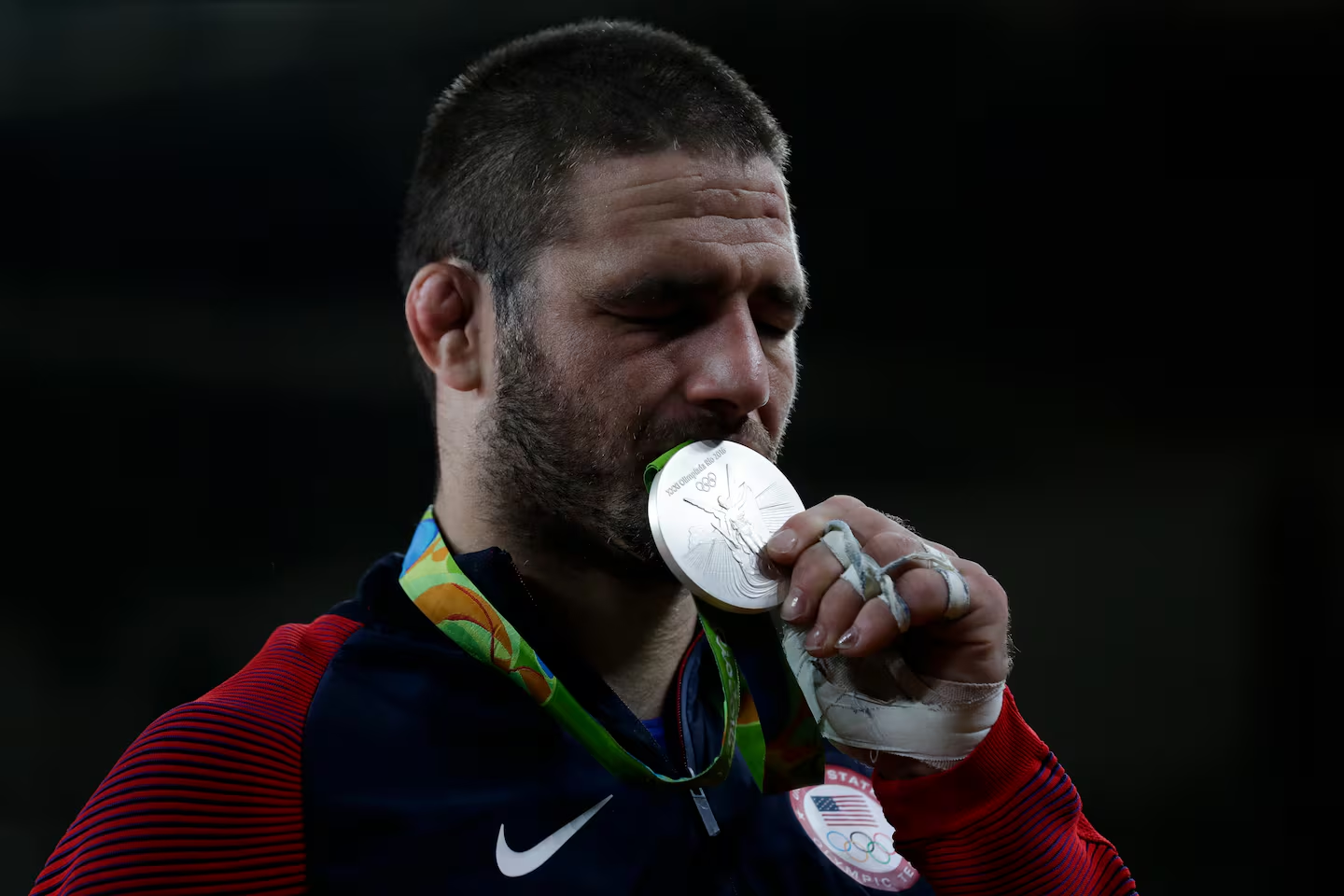
Now — I want to be clear. I’m not saying kids should push through serious medical situations. That’s not the point. But the mindset Travis showed — refusing to quit when he had every legitimate reason to — that’s worth talking about with your kids. He knew what he wanted, he knew what it was going to cost him, and he didn’t look for an exit.
That’s what Push Yourself & Stay Disciplined is all about.
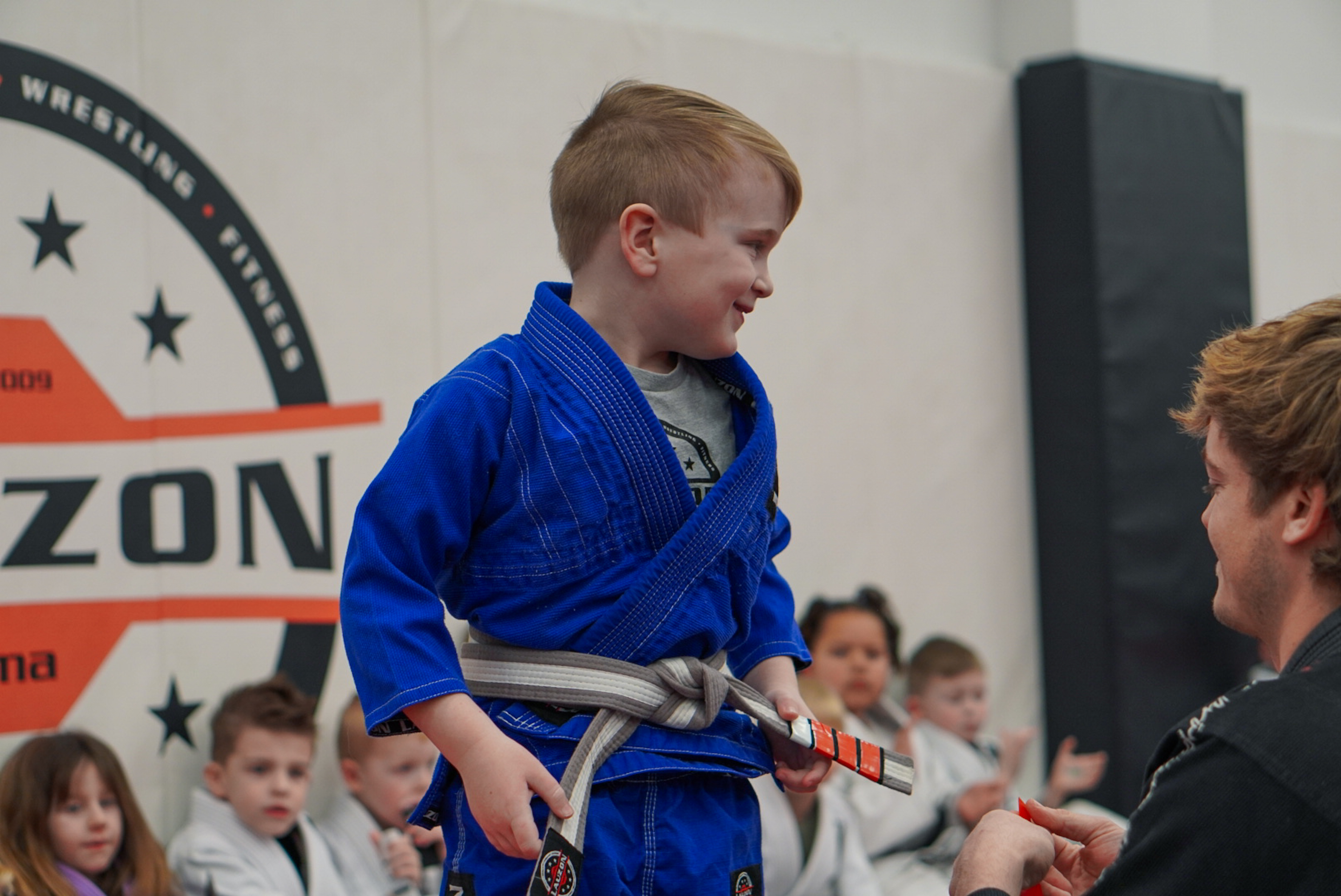
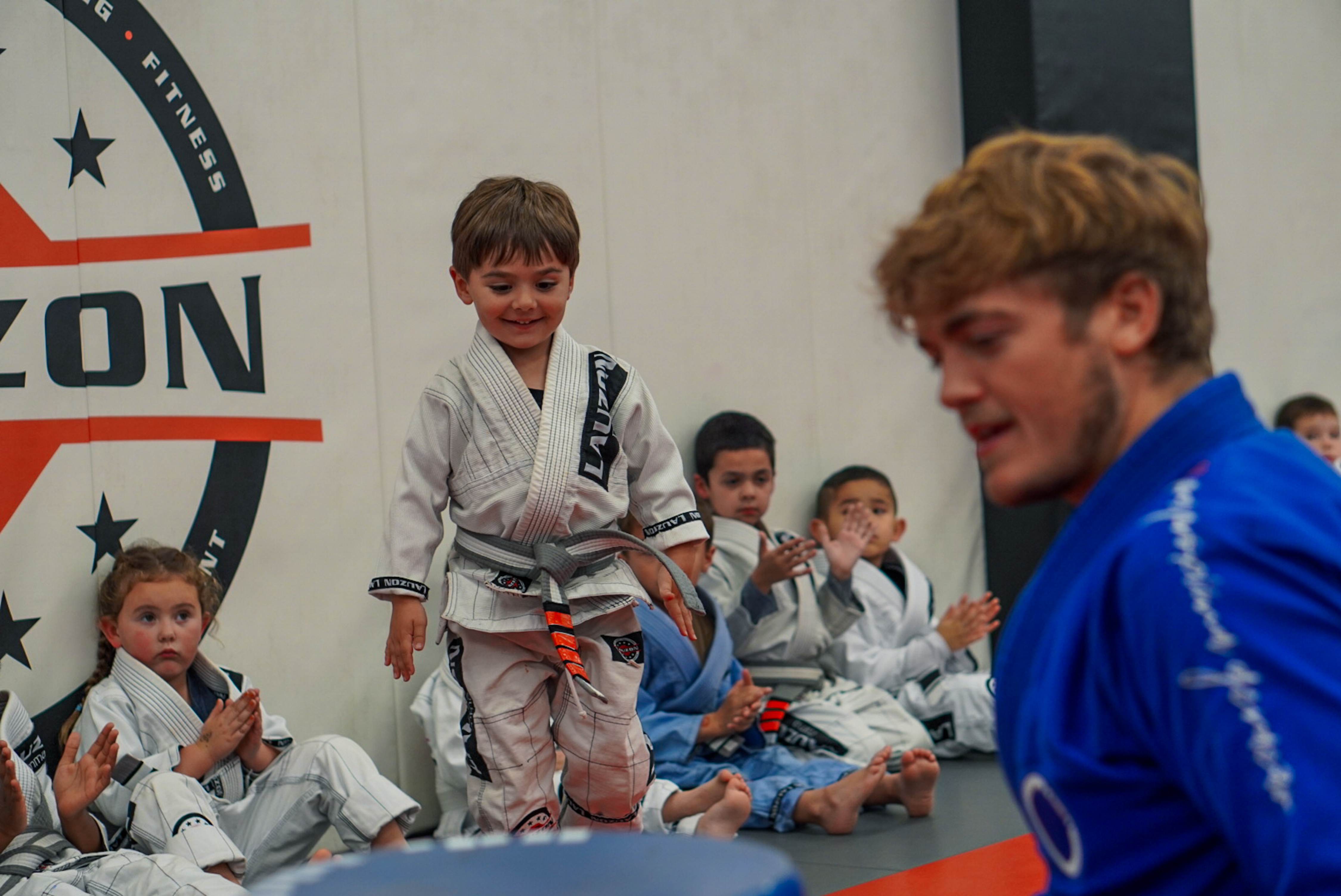
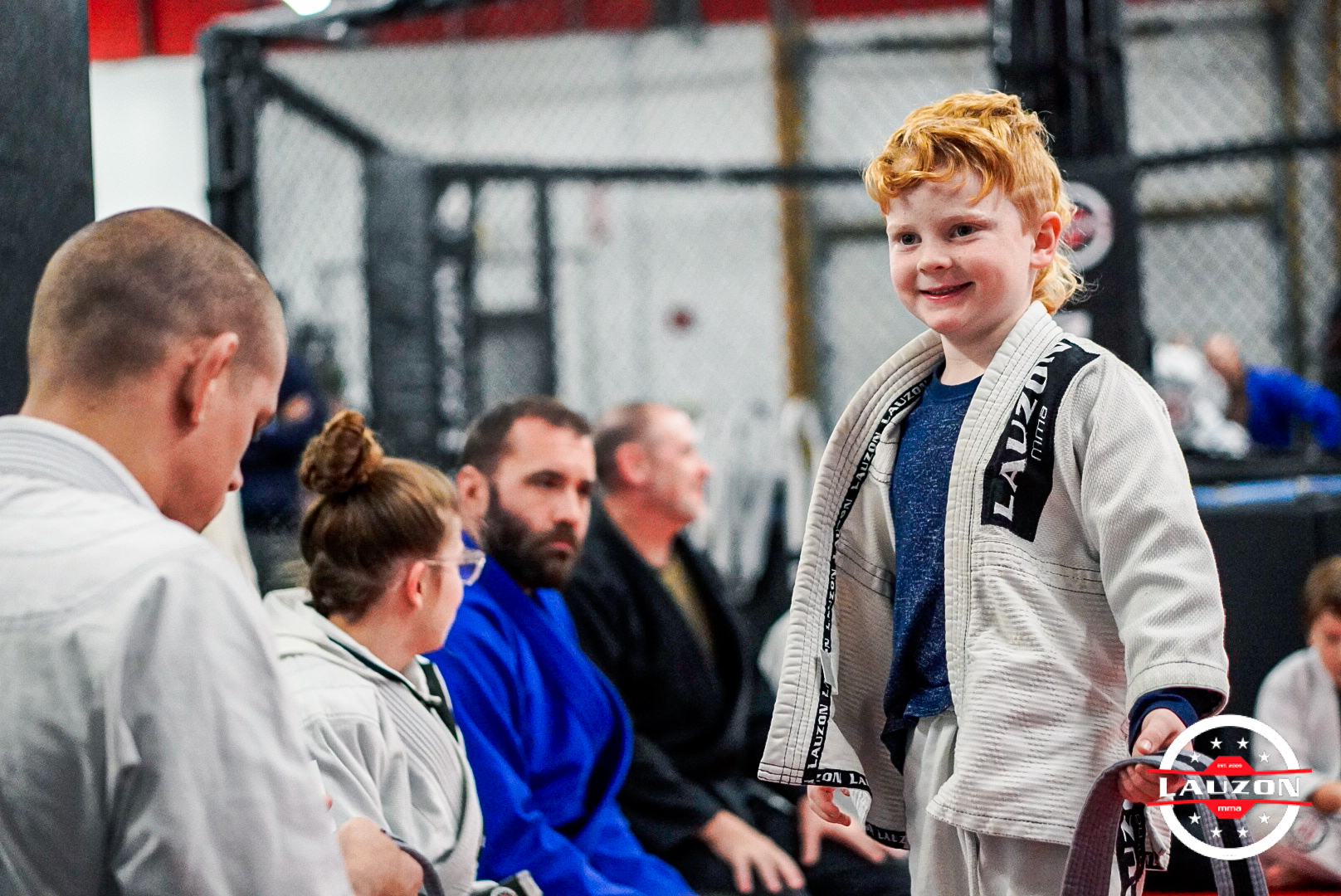
At Lauzon MMA, we teach something we call the Lauzon Life Lessons — a set of 15 principles we reinforce every week on the mat. They’re not just about martial arts. They’re a simple, repeatable framework designed to help kids build real character, handle pressure, and make better decisions — in the gym, at school, and everywhere else. Each week, we focus on one lesson and bring it to life through training.
It shows up in every class we run. For our Tiny Ninjas (ages 3–5), it starts simply — finish the drill, keep trying, don’t give up when it gets hard. Our Vipers (ages 6–9) start building the habit of consistency — showing up on their scheduled days, even when something else sounds more fun. And with our Cobras (ages 10–13), we can have real conversations about what discipline actually looks like — and what it costs when you don’t have it.
It’s so easy to skip a class. It’s so easy to say “I’ll work harder next time.” But next time has a way of never quite arriving. The kids who get the most out of their training — the ones who grow the fastest and carry those lessons into school, sports, and life — are the ones who learn early that discipline isn’t something you feel like doing. It’s something you decide to do.